Ever wondered what happens if the government wants to take your land for a road, pipeline, or public project? If you own a farm or ranch in West Virginia, the idea of eminent domain can feel overwhelming. In this guide, you’ll learn what west virginia farm eminent domain means, why it happens, what rights you have, and the steps you can take to protect your property and get fair compensation.
What Is Eminent Domain and Why Does It Happen?
Eminent domain is the legal power that lets the government take private land for public use. In West Virginia, this can include farmland, ranches, or open space needed for highways, schools, pipelines, or other projects. When this happens, the process is called condemnation.
The law says the government has to pay you “just compensation” for your land. But what counts as fair? And what if you think the taking isn’t necessary in the first place? These are common questions for West Virginia landowners facing condemnation.
How the Farm Condemnation Process Works in West Virginia
If you get a letter or a knock on your door about west virginia farm condemnation, don’t panic. The process follows a set path, and you have rights every step of the way. Here’s what usually happens:
- The government or utility decides it needs your land for a public project.
- You get a formal notice, often called a “notice of intent” or “offer to purchase.”
- The government may send appraisers to value your property and make you an offer.
- If you can’t agree on a price, the agency can file a condemnation lawsuit in court.
- The court process decides whether the taking is allowed and how much you should be paid.
You don’t have to accept the first offer. In fact, it’s a good idea to get your own appraisal and legal advice before signing anything. Many landowners end up with higher compensation by challenging the government’s initial offer.
Your Rights as a West Virginia Farm or Ranch Owner
When facing west virginia farm eminent domain, you have important rights that protect you from unfair treatment. Here’s what you can expect:
- The right to be notified in writing about the government’s plans
- The right to negotiate the price for your land
- The right to have your own appraisal
- The right to challenge the taking in court if you think it’s not actually needed
- The right to fair compensation, which can include not just the land taken but also damages to the rest of your property
It’s easy to feel powerless, but the law is actually on your side in many ways. Knowing your rights puts you in a stronger position.
What Counts as Fair Compensation?
“Just compensation” means the government has to pay you the fair market value of the property it takes. But figuring out that value, especially for a farm or ranch, can get complicated. It isn’t just the dirt under your feet. It can include barns, fences, crops, lost business income, and even the impact on the value of the rest of your land.
For example, if a new highway cuts your ranch in two, it can make daily operations much harder. Or if a pipeline runs through the middle of your best grazing field, it can lower the property’s overall value. The law allows you to claim these damages, but you have to prove them.
This is where having your own appraiser and a west virginia taking attorney comes in handy. They can help document the true impact and make sure you’re not shortchanged.
Common Challenges and Mistakes to Avoid
Many West Virginia farm and ranch owners run into the same problems during condemnation:
- Accepting the first offer without checking if it’s fair
- Not understanding what damages you can claim beyond the land’s basic value
- Missing deadlines to challenge the taking or the compensation
- Trying to negotiate with the government alone, without legal help
Here’s a practical example: A ranch owner receives an offer for land needed for a highway. The offer covers the land’s value, but not the cost to move livestock fencing or the lost access to a water source. By getting a second opinion and legal help, the owner may be able to claim extra compensation for these real-world losses.
How a West Virginia Condemnation Lawyer Can Help
Facing west virginia farm condemnation isn’t something most people do every day. The process is full of legal terms and tight deadlines. That’s why many property owners turn to a west virginia condemnation help attorney. Here’s how a lawyer can make a difference:
- Review the government’s offer and explain your options
- Arrange for a fair appraisal by an independent expert
- Handle negotiations so you don’t have to deal directly with the agency
- Represent you in court if you want to challenge the taking or fight for higher compensation
- Make sure you claim every dollar you’re entitled to, including damages you might not think of
A good attorney knows the local laws, the tricks agencies use, and how to build a strong case. This can mean less stress and more money in your pocket at the end of the process.
What to Do If You’re Facing Farm or Ranch Condemnation
If you get a notice about west virginia farm eminent domain, don’t rush. Instead, take these steps:
- Read everything you receive carefully and keep all documents.
- Don’t sign or agree to anything right away.
- Contact a west virginia taking attorney for advice before making decisions.
- Get your own independent appraisal if possible.
- Make a list of everything on your land that could be affected, not just the area being taken.
Taking a calm, informed approach can help you protect your land, your business, and your family’s future.
[IMAGE]
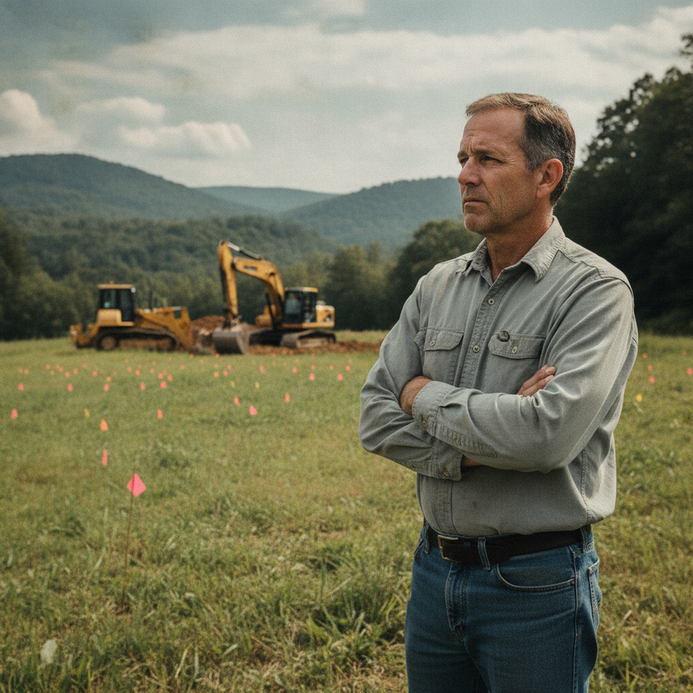
alt text: A West Virginia farmer stands in a field, looking at survey markers and construction equipment in the distance, contemplating the impact of eminent domain on the property. Prompt: Realistic daylight scene, rural West Virginia farm, middle-aged farmer in jeans and work shirt, distant construction vehicles, survey flags, rolling hills, sense of concern.
Conclusion
Eminent domain can feel intimidating, but you have rights and options. If your West Virginia farm or ranch is at risk, don’t go it alone. Talk to an expert who can fight for your interests and help you get the compensation you deserve. Contact us to learn more.