If you own property in Mississippi, you might worry about what would happen if the government wanted a piece of your land, or even the whole thing. You’ve probably heard terms like “easement” and “taking” tossed around, but what do they actually mean for you? This guide breaks down the Mississippi easement vs taking debate so you know your rights, what could happen to your property, and how to protect your interests.
Easement vs Full Taking: The Basics
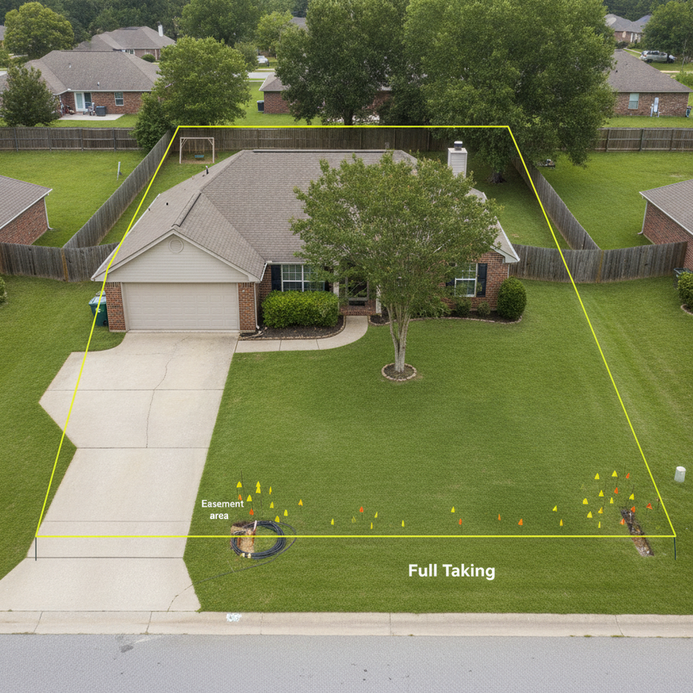
Let’s start with the simplest question: what’s the difference between an easement and a full taking? In Mississippi, both involve the government using private property for public needs, but they’re not the same thing. An easement is when the government (or sometimes a utility company) gets the right to use part of your land for a specific purpose, like building power lines, water pipes, or a road. You still own the land, but your use of it is limited. A full taking, on the other hand, is when the government actually takes ownership of all (or part) of your property. That means they now own it, and you don’t.
Ever wondered why one project only affects a strip along your property line, while another means you have to move out completely? That’s the difference between an easement and a full taking. It all comes down to how much of your property is needed and for what reason.
How Easements Work in Mississippi
Easements are pretty common in Mississippi, especially for things like power lines, pipelines, or road expansions. Here’s what usually happens: the government or a utility company contacts you about needing an easement. They’ll explain what part of your land they want to use and for what purpose. You still hold the title to your property, but you have to allow the easement holder to use it as described in the agreement.
There are a few types of easements, but the most common are permanent and temporary. A permanent easement means the right to use your land lasts forever (or until the project is removed). Temporary easements only last as long as the government or company needs for construction or repairs.
What Does an Easement Mean for You?
With an easement, you can usually keep living on and using your property. But there may be restrictions. For example, you might not be able to build a shed or plant trees in the easement area. Sometimes, having an easement can affect your property’s value or how you use your land in the future. And yes, you should be compensated for the loss of use and any impact on your property’s value.
What Is a Full Taking in Mississippi?
A full taking (sometimes called a total taking or fee simple taking) is when the government decides it needs all of your property for a public use, like a new highway, school, or utility project. In this case, you lose ownership of the land. The government becomes the new owner, and you have to move off the property.
There’s also something called a partial taking. That’s when the government only needs a part of your property, but not the whole thing. In both cases, the law says you must be paid “just compensation.” This usually means the fair market value of what’s taken, plus damages if the rest of your property is worth less after the taking.
How a Full Taking Affects You
Losing your entire property is a big deal. Not only do you lose your land, but you might also have to relocate your home or business. It can be disruptive, stressful, and emotional. The amount you’re offered as compensation matters a lot, and sometimes, property owners don’t agree with what’s being offered. That’s when having a knowledgeable legal team in your corner can make a huge difference.
Mississippi Easement Vs Taking: Key Differences
Now that you know what each one means, let’s look at the main differences between a Mississippi easement vs taking. Understanding these can help you figure out what to expect if you get a notice from the government or a utility company.
- Ownership: With an easement, you still own your property. With a taking, ownership passes to the government.
- Use of the Land: Easements limit certain uses but don’t remove you from the property. Full takings require you to leave the land.
- Compensation: Both require compensation, but the amount and type differ. Easement compensation is for the loss of use or value. Full taking compensation is for the value of the property plus damages to any remaining land.
- Impact on Your Life: Easements often have less impact, you can usually stay put. Full takings can mean moving, selling your home, or relocating your business.
- Legal Process: Both start with notice and an offer, but a full taking often involves more paperwork, hearings, and sometimes court proceedings if there’s a disagreement.
If you’re unsure what kind of action is affecting your land, the best move is to ask questions and get advice. The difference between a taking vs Mississippi easement can be life-changing, especially if you don’t know your rights.
The Eminent Domain Process in Mississippi
Whether it’s an easement or a full taking, it all starts with Mississippi’s eminent domain process. Here’s a general idea of what that looks like:
- The government or utility identifies land needed for a project.
- They contact the property owner and make an initial offer.
- There’s a negotiation period, where you can accept or challenge the offer.
- If you don’t agree, the government may file a lawsuit to get the rights they need. This is called a condemnation action.
- A judge or jury may decide what’s fair compensation if there’s a dispute.
It’s important to know that you’re not powerless during this process. You have the right to review the offer, negotiate, and even challenge the government’s right to take your property or easement in some cases. Working with a legal team that knows Mississippi easement vs taking law can help you get the compensation you deserve, and sometimes even stop the process if it’s not truly for public use.
Real-World Examples and What to Watch For
Let’s say the city wants to widen a road and needs to run a new sidewalk along your front yard. They might ask for a permanent easement for just that strip of land. You’ll still own your home, but you can’t build a fence or plant a tree along the sidewalk. You get compensated for that easement, but you don’t have to move.
Now imagine a new highway is planned right through your property. The government needs the whole parcel, so this is a full taking. You’ll be offered the fair market value for your home and land, plus help with relocation if it’s your residence. This is a much bigger impact, and you’ll want to make sure the compensation truly reflects your loss.
There are also partial takings. Maybe only the back section of your property is needed for a utility easement, but the rest stays with you. Or, perhaps only a corner of your land is needed for a new intersection. In each scenario, understanding the Mississippi easement vs taking difference helps you know what to expect, and what you’re owed.
How to Protect Your Rights and Get Fair Compensation
If you get a notice about an easement or a full taking, don’t panic. Here are some steps you can take to protect your rights:
- Read everything carefully. Don’t sign any documents until you understand what’s being asked.
- Ask questions about how your property will be affected and what compensation is being offered.
- Get your own property appraisal. Sometimes the government’s offer doesn’t match the true value of your land.
- Talk to a lawyer who knows Mississippi eminent domain law. They can help you negotiate, challenge unfair actions, and make sure you’re treated fairly.
Every property is unique, and what’s fair in one case might not be in another. The best way to make sure you aren’t short-changed is to get expert advice early in the process.
[Inline image placeholder: A friendly, easy-to-understand diagram showing a house and yard, with one section marked as an ‘easement area’ (e.g., with utility lines) and another section marked as ‘full taking’ (entire property outlined), all labeled for clarity.]
Conclusion
Knowing the difference in the Mississippi easement vs taking debate can make all the difference when your property is at stake. Whether you’re facing a minor easement or a full taking, you deserve to understand your rights and get fair compensation. Contact us to learn more.