Ever wondered what happens when the government wants to take your property, but you’re not sure why? Maybe you’ve heard someone mention their building was being seized because it was considered an eyesore. Or perhaps you know a business facing removal to make way for a new shopping center. These situations often fall under two types of government actions: blight taking and economic development taking. In this article, you’ll learn the real difference between blight taking vs economic development taking, why it matters, and what it could mean for you as a property owner.
What Is Eminent Domain?
Before we dive into the details, let’s start with the basics. Eminent domain is the power the government has to take private property for public use, as long as they pay you fair compensation. It’s written into the U.S. Constitution, but the rules and reasons for using it can be complicated. Two of the most common, and often confusing, types are blight taking and economic development taking.
Defining Blight Taking
Blight taking is when the government steps in and takes property because it thinks the property is rundown, unsafe, or holding back the neighborhood. The word “blight” is just a fancy way of saying the property is in bad shape. Sometimes entire blocks are labeled “blighted” even if only a few buildings are in poor condition.
A blight taking usually happens in areas with abandoned buildings, crumbling structures, or places that attract crime. The idea is that removing these properties will make the community safer and more attractive. But what counts as blight can be pretty subjective. One city might see a historic building as worth saving, while another might label it a problem.
Property owners often feel frustrated during a blight taking. Maybe you keep your building in decent shape, but your address is included in a larger “blighted” zone. Suddenly, you could be forced to sell, even if you disagree with the label.
What Is Economic Development Taking?
On the other hand, economic development taking is when the government takes private property, not because it’s rundown, but to hand it over to private companies for new projects, like shopping centers, office parks, or luxury apartments. The goal is to boost the local economy, create jobs, or increase tax revenue.
This kind of taking got a lot more attention after a famous Supreme Court case called Kelo v. City of New London. In that case, the city took homes and gave the land to a private developer, hoping it would spark economic growth. The court said it was allowed, but the decision was controversial. Many people argued that it made it too easy for the government to take property from one private owner just to give it to another.
Economic development taking isn’t about fixing “blight” or dealing with unsafe buildings. Instead, it’s about the government deciding that a new project is better for the community, even if your property is in good condition.
Blight Taking Vs Economic Development Taking: The Core Differences
Now that you know the basics, let’s look at the real differences between blight taking vs economic development taking. Both involve the government using eminent domain, but the reasons and impacts are different.
Purpose and Justification
Blight taking is about cleaning up areas considered unsafe or rundown. The government usually argues that these properties are hurting the neighborhood.
Economic development taking is about making way for new development, like retail or commercial projects, even if the property is perfectly fine. The argument is that the new use will benefit the public through jobs, taxes, or amenities.
How Properties Are Chosen
For blight taking, the government usually completes a study to decide if an area is “blighted.” This can include things like vacant lots, unsafe buildings, or high crime. Sometimes, even well-kept properties get caught up if they are inside a zone labeled as blighted.
For economic development taking, the government targets properties in a location that fits a new project. Your home or business might be in the way of a new stadium or shopping center, regardless of its current condition.
Public Use vs. Private Benefit
Blight taking is often easier for the government to justify because it’s about improving safety or health. But with economic development taking, the benefit is less direct. It’s usually about boosting the economy, even if the property ends up with another private owner.
Controversy and Legal Challenges
Blight taking can spark protests if people feel the “blight” label is being used too broadly. Economic development taking is often even more controversial, since it can look like the government is picking winners and losers. Both can lead to lawsuits and long legal battles.
Compensation
In both cases, the government must pay “just compensation” for the property. But in practice, what you get offered might not feel fair. This is where having an experienced eminent domain lawyer can make a big difference. They can help you fight for a better deal and challenge the reason for the taking if it’s unjustified.
Real-World Examples
Seeing how these takings play out in real life can make the differences clearer.
Imagine a city block with several empty, boarded-up homes attracting crime. The city declares the area blighted and decides to take all the properties, including some that are still occupied and in decent shape. The goal is to tear everything down and build a park or affordable housing. That’s a classic blight taking.
Now think about a busy neighborhood where a developer wants to build a new sports arena. The homes and shops in the area are well-maintained, but they’re in the way. The city uses eminent domain to acquire those properties, not because they’re blighted, but to help the developer. This is economic development taking.
In both situations, property owners may feel powerless. That’s why it’s so important to know your rights and get legal advice early.
Legal Protections and Your Rights
You might be wondering: what can you do if you find yourself at risk of losing your property to blight taking or economic development taking?
First, remember you have rights. The government can’t just take your property without a process. You’re entitled to notice, a chance to be heard, and fair compensation. You can challenge the “blight” label or argue that the taking isn’t truly for public use. Many states have passed laws to make economic development takings harder after the Kelo decision, but the rules still vary widely.
Working with a lawyer who understands eminent domain is your best defense. They can review your situation, explain your options, and help you push back if the government is overreaching. Even if the taking goes forward, a lawyer can often negotiate a better settlement or spot mistakes in the process.
Blight Taking Vs Economic Development Taking: Comparison Table
Sometimes, it helps to see the differences side by side.
| Feature | Blight Taking | Economic Development Taking |
|, , , , , , , , , , , , |, , , , , , , , , , , , , , , , , , |, , , , , , , , , , , , , , , , , |
| Main Reason | Addressing rundown/unsafe areas | Promoting new private development|
| Typical Properties | Abandoned, neglected, or unsafe | Well-maintained, valuable |
| Who Gets the Land | Often public use or redevelopment | Usually private developers |
| Common Legal Issue | What counts as “blight”? | Is it really for public use? |
| Controversy Level | High (subjective labels) | Very high (private gain) |
| Example Outcome | New park, affordable housing | Shopping center, stadium |
What Should Property Owners Do?
If you get a notice that your property is at risk, whether for blight or economic development, don’t panic, but don’t ignore it either. The earlier you get legal help, the more options you have. An experienced eminent domain attorney can:
- Review the government’s reasoning for the taking and challenge it if possible.
- Help you gather evidence about your property’s condition or value.
- Negotiate for the highest possible compensation.
- Represent you in court if you need to fight the taking.
Facing a government taking is stressful, but knowing the difference between blight taking vs economic development taking gives you a head start. Each situation is unique, so personalized legal advice is critical.
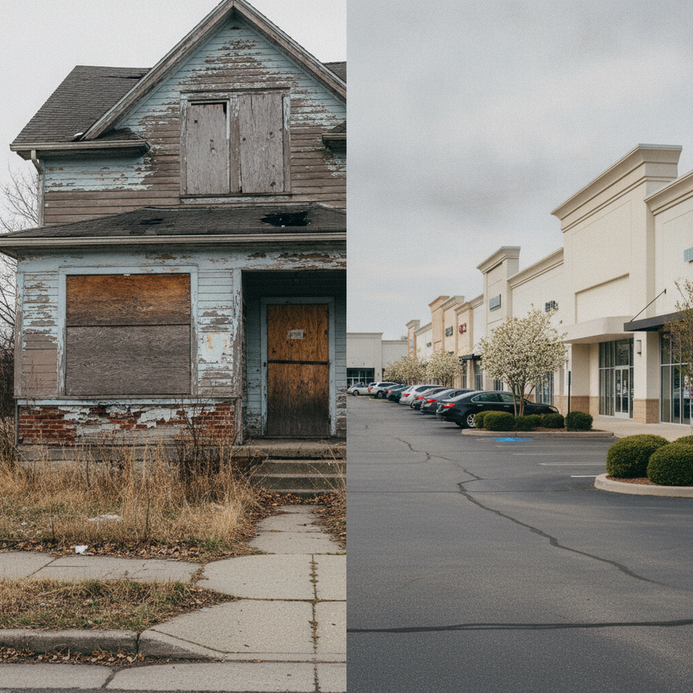
[Inline Image Placeholder: A split illustration showing a dilapidated building on one side and a modern commercial plaza on the other. Prompt: Realistic depiction of a rundown, boarded-up house contrasted beside a new, thriving shopping center.]
Conclusion
Understanding the difference between blight taking and economic development taking can help you protect your rights as a property owner. If you face either situation, don’t go it alone. Contact us to learn more.