Ever felt like the government or a public project took away the value of your property, but no one knocked on your door or offered compensation? That situation is called “inverse condemnation.” If you’re a property owner in Wisconsin, understanding how Wisconsin inverse condemnation works could protect your rights and your wallet. In this guide, you’ll learn what inverse condemnation means, how it happens here, and practical steps to take if you think your property’s been affected.
What Is Inverse Condemnation in Wisconsin?
Inverse condemnation is when the government takes or damages private property for public use but doesn’t follow the official process or pay the owner. In Wisconsin, the law says the government must pay “just compensation” if it takes or damages private property, even if it never files a formal eminent domain case.
Unlike regular eminent domain cases, where you get a notice and a chance to negotiate, inverse condemnation puts the burden on you, the property owner, to prove the government’s actions damaged your property. Maybe a new highway blocks access to your business. Or road construction floods your yard every time it rains. If the value or use of your land suffers because of a government project, you might have a Wisconsin inverse condemnation claim.
Common Examples of Inverse Condemnation in Wisconsin
Not sure if your situation counts? Here are a few real-world examples that show how Wisconsin inverse condemnation can play out:
- The city builds a new road that cuts off direct entry to your store, causing a drop in customers.
- Roadwork changes water drainage so your basement now floods after every storm.
- A public utility installs power lines so close that you lose part of your yard or can’t build your planned garage.
- Noise from a new government facility makes your property less desirable or harder to rent.
In all these cases, there’s no formal taking. But the impact is real, and you may have a right to compensation.
How to Spot the Signs: Is Inverse Condemnation Happening to You?
Sometimes it’s obvious when your property is affected by a public project. Other times, the harm creeps in slowly. Here are clues you might be dealing with inverse condemnation in Wisconsin:
- Sudden or repeated flooding that never happened before nearby construction.
- Loss of access, like a driveway blocked by a new sidewalk or median.
- Noticeable drop in property value after a government project.
- Utility work or installations that take up part of your land with no payment offered.
If you notice any of these signs, don’t ignore them. Document the changes. Take photos, keep records of repairs, and note when problems started. This evidence can be crucial if you decide to pursue a claim.
The Legal Process: How Wisconsin Inverse Condemnation Claims Work
So what should you actually do if you think your property’s been affected? Here’s a step-by-step look at how the process usually unfolds:
- Gather Evidence: Start by collecting proof of the damage or loss. Photos, repair bills, property value assessments, and any correspondence with government agencies can all help.
- Contact the Agency: Sometimes, a direct conversation with the city, county, or utility involved can lead to a quick resolution. But don’t expect them to admit fault or offer compensation right away.
- Consult a Wisconsin Taking Attorney: If talking doesn’t work, it’s time to get legal advice. An attorney experienced in Wisconsin inverse condemnation can tell you if you have a strong case and what your options are.
- File a Claim: If you move forward, your lawyer will help you file a claim in court. You’ll need to show that the government’s actions directly caused a loss of value or use of your property.
- Court Decision or Settlement: Many cases settle before trial, but if not, a judge or jury will decide if you deserve compensation.
The whole process can take months or even years. But if you win, you could recover not just the lost value, but also legal fees and costs in some cases.
Key Legal Principles: What Makes a Successful Claim?
Not every inconvenience qualifies as inverse condemnation. Wisconsin courts look for some key factors:
- There must be a direct link between the government action and the harm to your property.
- The harm has to be real and measurable, not just a minor annoyance.
- In some cases, even temporary impacts can count, but permanent changes make a stronger case.
For example, if a city blocks your business driveway for months during construction, you might claim lost business income. But if the roadwork only made it a little noisier for a week, that likely doesn’t meet the threshold.
It’s also important to know that Wisconsin law can be strict about deadlines. You usually have a limited window to file a claim after the harm occurs. This is another reason to act quickly if you think you have a case.
How an Attorney Can Help: Navigating Wisconsin Inverse Eminent Domain Laws
The rules around Wisconsin inverse condemnation are complicated. Most people don’t deal with these laws unless they have to. That’s where a knowledgeable Wisconsin taking attorney comes in.
An attorney can help you:
- Review your situation and explain your rights under Wisconsin law.
- Gather and present evidence in a way that supports your claim.
- Negotiate with the government or public agency for fair compensation.
- File the correct legal paperwork and meet important deadlines.
- Represent you in court if a settlement isn’t possible.
If you’re up against a city, county, or powerful utility, having someone in your corner evens the playing field. Plus, many attorneys who handle these cases offer free consultations, so you can find out if you have a case without risk.
Practical Steps: What to Do If You Suspect Inverse Condemnation
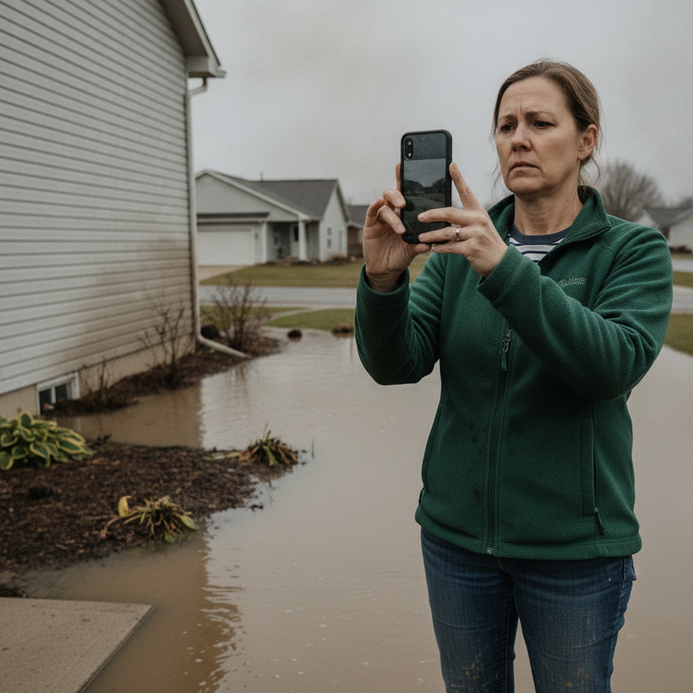
Here’s a summary of practical steps if you think you’re facing Wisconsin inverse condemnation:
- Document everything, take photos, save receipts, and write down dates.
- Try contacting the government agency to report the problem and ask for help.
- Keep a record of all your communication.
- Speak with a Wisconsin condemnation help attorney as soon as possible.
- Don’t wait, the sooner you act, the stronger your case may be.
[Inline image placeholder: Close-up of a property owner taking photos of flood damage in front of their home, showing concern and careful documentation. Overcast weather, suburban Wisconsin setting, realistic style.]
Conclusion
If you believe your property has been damaged or devalued by a government project and you haven’t been offered compensation, you may have a Wisconsin inverse condemnation claim. Acting quickly and getting the right help can make a big difference. Contact us to learn more.